
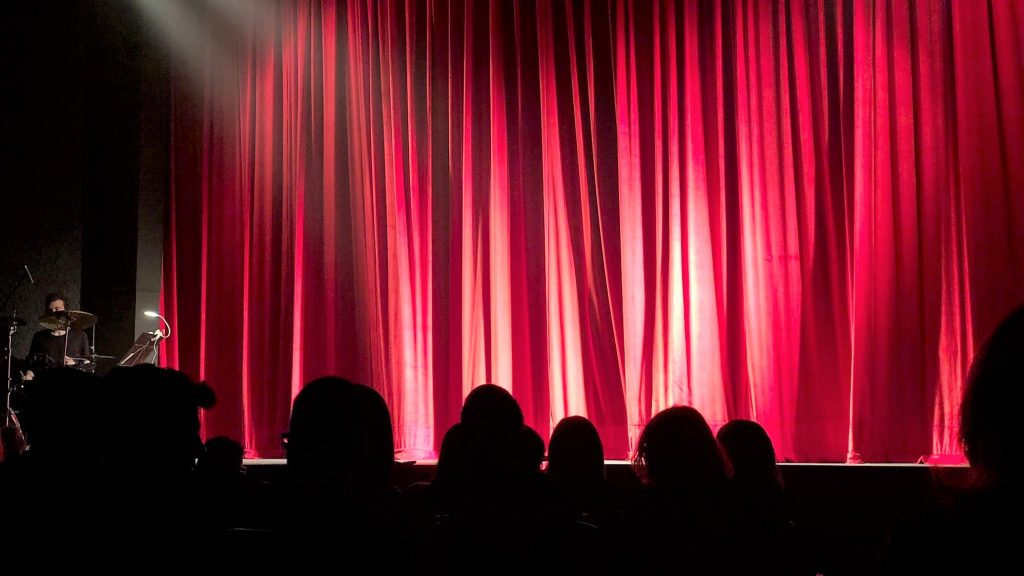
My family attended a play at a grand historic theater. I was excited to see my daughter-in-law perform in “The Little Mermaid.” Ever since childhood, I’ve always loved plays. Unfortunately, the last several trips to plays ended in frustration. I simply couldn’t hear the words clearly and missed too much of the story. So I looked for solutions. As a result, I know a lot more about hearing assistive technology and how to plan ahead. Above all, I discovered that we need a lot more hearing advocacy for public places.
Over time, I’ve noticed that most staff in public venues are not well informed about hearing assistive equipment. They don’t know where it is, how to use it or how to maintain it.
I think where hearing loss is concerned, some people need to speak up more. Those are the people with hearing loss. I also think others need to listen more. Those are the people providing help.
It’s a bright summer day. We’re energized by this fun family gathering. Yet I always feel a little apprehensive at the start of these events. I’m never sure how well it will go. Fortunately, I know the Little Mermaid story already. My very thoughtful daughter-in-law sent me the DVD weeks ago. She knows I probably won’t hear a lot of the words clearly. Even stage mics and premium hearing aids can’t overcome my hearing difficulties. My inner ears have damage so even when words are loud they are still not clear. I’m pretty far from the speakers hanging on the wall. Hence, the audio won’t be as clean or intense as I need it.
The Americans with Disabilities Act (title III) requires certain accommodations. Most venues with fixed seating and a sound system must provide hearing assistance. I’m grateful to all the advocates that made this happen. Consequently, I’ll benefit from the theater’s pubic listening system.
I hand my ticket over to the man just inside the door. I ask him “where can I find your devices that help with hearing loss?” He helpfully nods over his shoulder. “You need to go to the concession stand” he says. My family goes off to find their seats. I take my place in line at the concession stand.
When I get to the front, I lean toward the smiling woman in the maroon vest standing there. I ask her for hearing assistive technology. She squints at me for just a second. Then she suggests I go speak to an usher. This touches off a familiar little feeling of heaviness in my stomach. I sense this experience may turn out like other experiences I’ve had in public spaces. I thank her, turn and go off to find an usher. There is one standing at the back of the theater. “Where can I find your hearing assistive technology?” I ask. Without missing a beat, he points across the lobby. “You need to go to the concession stand” he says. Uh-oh, I’m in trouble.
I tell the usher what the concession lady said. This leads to a brief huddle among a handful of ushers. Finally one emerges who has worked there long enough to know what the heck I am talking about. She politely leads me to a small closet behind the concession stand. Once there, she rummages around in a box. Then she hands me a wallet-size FM receiver and headphones in exchange for my driver’s license. This receiver is like a handheld radio. I can adjust the volume and use the headphones to help me hear the show better.
Finally I settle into my seat. I try to turn the volume dial from zero then notice it is already at 5. The little light that should turn red remains dark. This unit has a dead battery. It’s likely nobody has looked at it since its last use. It went back into the box in the closet without further thought. I climb over the legs of my family and head back out to the lobby. It’s empty now because the show is about to begin.
Perhaps you wonder why I go to all this trouble. Take a minute to imagine the scene. You sit in this dark grand theater. The creative scenery and colorful costumes draw you in. The stage lights cast dim light onto the faces around you. Everyone sits riveted to the show. However, you cannot hear the words from the stage clearly. It is like glass encases you. With only bits of sentences and visual cues, you strain to put the story together in your head. All at once, everyone in the theater let’s out a laugh or a gasp. You have no idea why. As a result, you cannot share in the experience with everyone else. Ask anyone with hearing loss who has experienced this and they will tell you. Sitting alone and clueless while a crowd around you laughs together is one of the loneliest feelings in the world.
Back in the lobby, I stand alone against the wall as the same usher once again rummages through the closet. Slowly anger rises up through my chest. Why don’t these people support me with my hearing loss? Don’t they care that I will end up in tears? Don’t they know I’ll feel totally alone in a theater of 1700 people? I feel my head start to get warm. Then something unexpected happens. My heightened emotions give way to reason. It becomes clear that the theater people are simply not aware of my experience. They are kind and well-meaning people. Nobody has painted a picture of hearing loss for them.
Subsequently, as my anger dissipates, I realize that it’s me and others with hearing loss who need to speak up. How can I expect anyone to meet my needs if I haven’t told them about it? This requires more hearing advocacy for public places. We should politely share our experience with the people who work in public venues. Even more importantly, we must advocate to the owners and managers of these places. We can help them understand how important this system is. They put it in because the law said they must. They may not know how grateful people with hearing loss are to enjoy a show as much as everyone else.
There are a lot of people with hearing loss out there. We need to come together to tell the world how and why to accommodate our needs. If we stay silent, we cannot expect anything to improve. We should express gratitude for these listening systems when things go well. In addition, we should follow up with management when the system fails. When we don’t, we end up alone in a theater full of people. Even worse, we end up staying home. I can make things better for you and you can make things better for me. We need more hearing advocacy for public places. Collectively we must find our voice. We are worthy of these connections.