
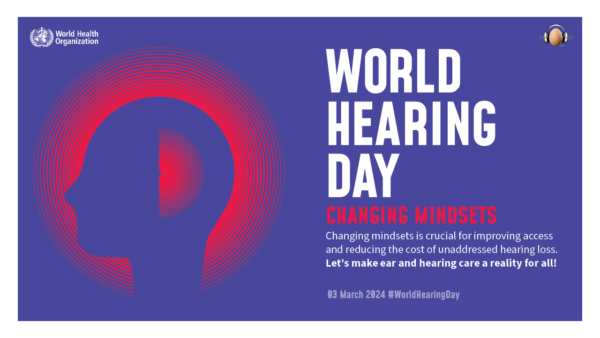
Sunday, March 3 marks “World Hearing Day,” an opportune moment to appreciate our access to hearing health services and to reflect on the global impact of hearing loss. This worldwide campaign, spearheaded by the World Health Organization (WHO), centers this year on changing mindsets. The WHO is dedicated to dismantling the barriers created by social misconceptions and stigma through education and outreach. These efforts, aimed at both the public and healthcare professionals, are crucial for ensuring that everyone in need can get access to ear and hearing care services.
Around the world, the demand for ear and hearing care greatly exceeds the available services, with more than 80% of such needs going unmet. Specifically, in Africa, about 78% of countries report having fewer than one audiologist for every million residents. While many of us know how debilitating it is to wait several weeks or travel long distances for hearing healthcare, it’s important to recognize that our access is often significantly better than what is available to others.
The World Health Organization has calculated that the global economic burden of untreated hearing loss amounts to approximately $980 billion annually. This figure encompasses the economic impact resulting from reduced work productivity and the societal costs associated with social isolation, due to limited access to rehabilitative services for hearing loss.
Deeply ingrained societal misperceptions and stigmatizing mindsets are key factors that limit efforts for preventing and addressing hearing loss.
Change these mindsets:
Myth: Hearing Loss Only Affects the Elderly
Fact: While it’s true that hearing loss is more common in older adults, it can affect people of all ages, including children and young adults. Exposure to loud noises, certain illnesses, and genetic factors can cause hearing loss at any age. For example, approximately 15% of middle-aged adults (41 to 60 Years) experience some form of hearing loss, often beginning with difficulty hearing in noisy environments.
Myth: Hearing Loss is Inevitable
Fact: WHO estimates over 1.1 billion young people (aged between 12-35 years) are at risk of hearing loss due to exposure to noise in recreational settings and that around 60% of childhood hearing loss is preventable. Preventable causes of hearing loss and deafness include:
- Infections such as meningitis, measles, mumps, and chronic ear infections, which can be prevented through vaccination, improved hygiene, and better access to healthcare.
- Exposure to loud noises, which can be mitigated through the use of protective devices, lowering the volume of electronic devices, and avoiding prolonged exposure to loud environments.
- Ototoxic medications and chemicals, which can be managed by using alternatives when available and monitoring hearing in patients who use these substances.
- Poor perinatal care, which can lead to conditions like birth asphyxia, jaundice, and infections that cause hearing loss; preventable through improved maternal and neonatal care.
Myth: Hearing Aids Don’t Work Well
Fact: Hearing aids stand as a remarkable (though not flawless) piece of technology, providing numerous benefits that markedly enhance one’s quality of life. Those who use hearing aids recognize their limitations in challenging listening environments like noise, distance, and reverberation, where performance may not meet expectations, influenced by the nature and severity of hearing loss. While they are not a panacea and cannot restore hearing with the same efficacy as glasses can for vision, the advantages they offer are substantial. These include improved communication, richer social engagement, increased independence, better mental health, heightened safety, enhanced work performance and a reduced risk of loneliness and social isolation that can adversely affect cognitive health. They are an investment in a better quality of life.
World Hearing Day is a great time to acknowledge the critical importance of hearing health and the profound impact of hearing loss on individuals worldwide. The WHO’s initiative to change societal mindsets about hearing loss is a commendable step toward increasing awareness and accessibility to ear and hearing care for all. By debunking common myths and spreading factual information, we can collectively work towards a world where the stigma surrounding hearing loss is eradicated, and preventive measures are widely recognized and implemented. The economic, social, and personal costs of untreated hearing loss underscore the urgency of expanding access to care and improving the quality of life for those affected. Let this day be a reminder of our shared responsibility to advocate for better hearing health services globally and to support those in our communities facing hearing challenges. Together, we can make a difference in the lives of millions, ensuring that hearing care becomes a priority in public health agendas around the world.