
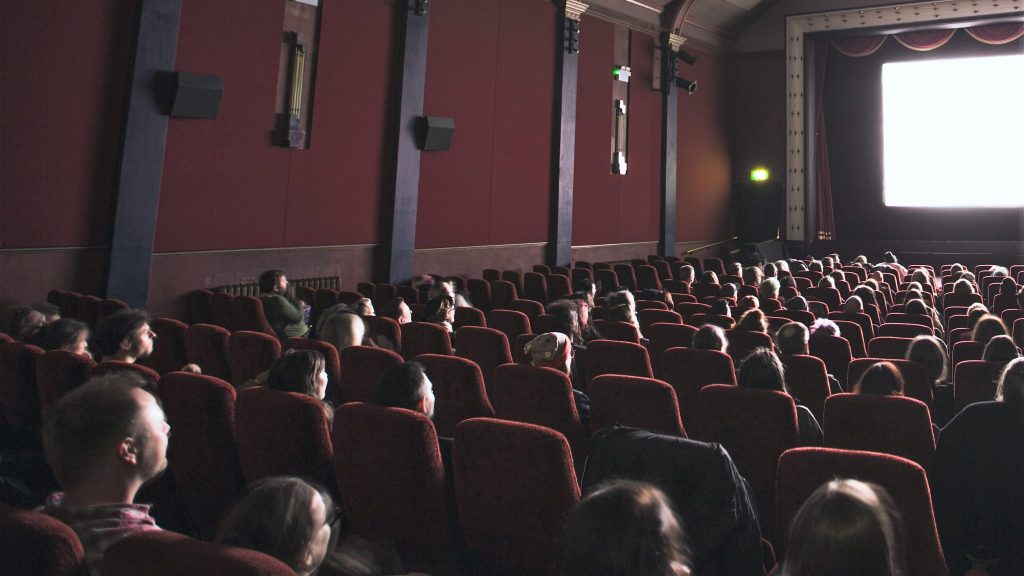
Movies have a story for everyone, whether you prefer sci-fi, a scary thriller, comedy, romance or tales of adventure. The common thread under all the dazzling special effects, big name stars and spectacular scenes is the story line itself. We need the story to tie the whole thing together and bring us to some sort of conclusion. But what if we cannot follow the story? For many people with hearing loss there is a lack of clarity to the words. Even when the words are very loud, we still cannot understand them. The movie becomes confusing and loses its impact. Clearly we need movie theater accessibility.
Fortunately, in 2017 the Dept. of Justice made a ruling under ADA title III (28 CFR Part 36). Now movie theaters must provide closed captioning and audio description for any digital movie distributed with such features. (These captioning requirements do not apply to some small independent films and have other exceptions.) This is a wonderful accomplishment for people who struggle to hear at the movies.
I was excited to see a movie with my family. This film was about the unique gifts people with disabilities bring to our world. It stressed the importance of supporting people with disabilities. The irony is that the film producers did not include data for captions. I called the distributor, who said the film had beautiful imagery. She said I would still enjoy the film even if I couldn’t hear many of the words. I do enjoy beautiful imagery and she was trying to console me. Still, this is like seeing a movie in Spain when you don’t speak Spanish. The movie enthralls the crowd around you. Perhaps they even cry or laugh. They’ll have so much to talk about afterwards too. Meanwhile, you sit there and strain to put together the story based solely on visuals. Imagery alone is not enough. This made me even more grateful for captioning.
Captioning devices give us back the connection we need to enjoy movies just like everyone else, as it should be.
My youngest son likes to take me to the latest movies, especially Star Wars movies. We always drive past our local theater on our way to another cinema about 20 miles away. I like this movie theater because they have a “CaptiView” captioning system. This device displays captions so I can follow the dialog of the movie in real time. It has louvres so it won’t disturb those around me and it fits snugly into the cup holder. I like to position the captions to appear just below the screen in my line of sight. All I need to do is bend the arm on the captioning box. This is wonderful movie theater accessibility that I wish more people enjoyed.