

It’s logical to think that to hear better, we should simply make things louder. On its face, this is true. We do hear sounds better when they are louder or more intense. However, when we want to hear better, often what we actually want is to understand speech better. We want more clarity. It turns out that loudness and clarity are two separate things. If there is damage in the inner ear, even loud speech can still sound muffled. This is why you can hear but can’t understand.
Inner ear damage
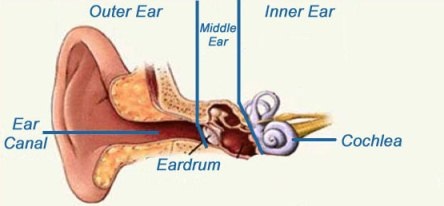
About 90% of hearing loss is sensorineural. This means there is damage to tiny hair cells and/or nerve fibers. This occurs deep within the tiny cochlea of our inner ear. These hair cells and nerve fibers are crucial players in processing the sounds we hear. As a result of this damage, bits of words get lost on their way to the brain. Depending on where we have damage, certain vowels or consonants drop off. As a result, even when things are loud enough, we hear but can’t understand. We end up guessing at words. For example, I cannot hear “t” very well. On word tests, “ten” incorrectly becomes “him”. “True” incorrectly becomes “prove”. It’s like living in a world of Wheel of Fortune. Imagine trying to name a tune played on a piano with some keys missing.
Causes of damage
There are various causes of this damage. Genetic mutations, ototoxic drugs, exposure to loud noises and the aging process are some of them.
- Noise exposure is the one area of hearing damage you can prevent. It can take years for damage to become apparent. Therefore, limit the volume of the music coming through your earbuds and wear earplugs at concerts. You should also wear ear protection around loud machinery like lawnmowers or leaf blowers. Protect your hearing now. You will be glad you did later in life.
- Genetic hearing loss is a fascinating area of research. Unlike birds and fish, human hair cells do not regenerate. In other words, once they break, they do not grow back. Genetic scientists are working diligently to fix this. There are promising early clinical trial results. Researchers have identified over 150 genetic mutations that cause hearing loss. I inherited hearing loss from my Dad. My sister, daughter and several cousins have it as well. Our genetic mutation was identified through the MORL lab at the University of Iowa. I feel more hopeful just having this information. Still, it’s hard to predict how many more years it will take to reach widespread solutions. In the meantime, cochlear implants are a life changing solution for many. These implants bypass the damaged cochlea. My sister lost almost all her hearing and got two cochlear implants. Now she hears much better than I do with hearing aids.
Other types of hearing loss
In addition to sensorineural hearing loss, other people have conductive hearing loss. This involves the ear canal, ear drum and outer ear, or the three tiny bones in the middle ear. There are successful medical interventions in many cases.
Some people have a combination of sensorineural and conductive hearing loss.
If you have concerns about your hearing, you should tell your doctor. It’s vitally important to address certain symptoms with an ENT (ear, nose and throat) doctor right away. For example, if your hearing loss is sudden, you’re dizzy or there are physical symptoms. There are effective treatments that rely on early intervention.
Other factors that undermine hearing
Many other factors impact the ability to hear as well. As you can guess, the brain itself has a lot to do with it. One factor is our working memory, which helps provide context to conversations. Another is our brain’s ability to tell the difference between various tones.
In conclusion, the process that sound travels through to our brain is fascinating and amazingly complex. If there’s inner ear damage, we can hear but can’t understand. Knowing this helps set realistic expectations. Unfortunately, technology cannot solve this problem. It can certainly help substantially though. Above all, the future is full of hope.